Glow, Pause, Repeat: Reading the Real Movement of a Winter Lights Trail
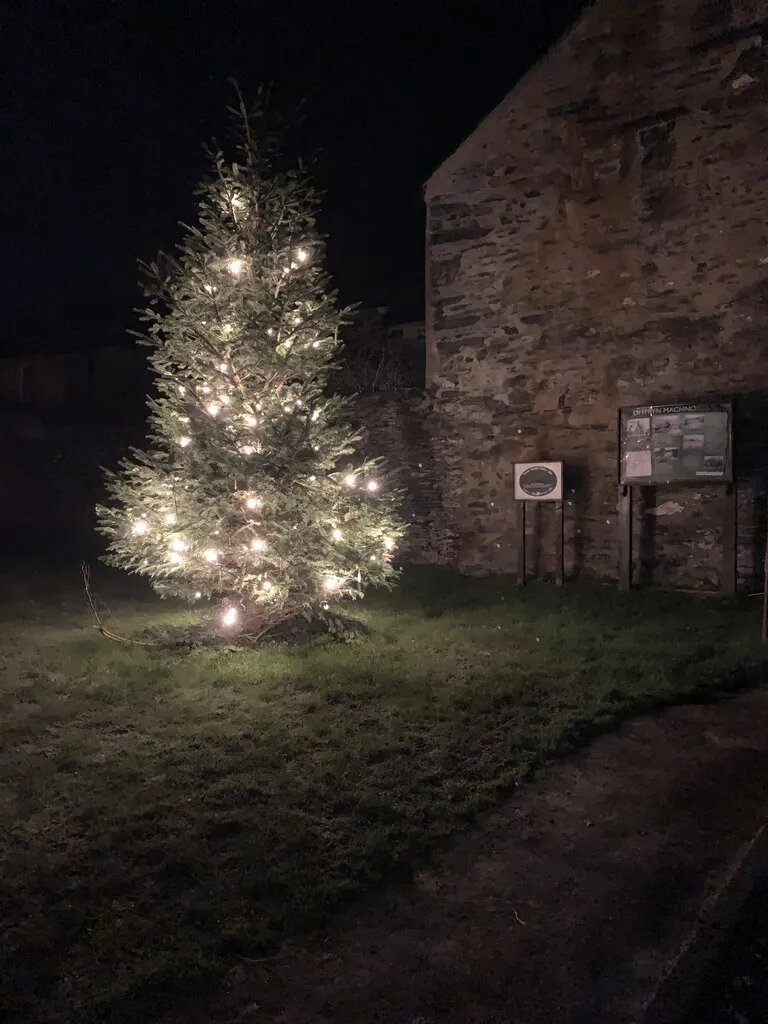
Photo: Richard Hoare (photographer), Richard Hoare (photographer) , CC BY-SA 2.0, via Wikimedia Commons
There is a particular kind of December disappointment that comes from glancing at your pedometer after a lights trail. You have been out for an hour and a half. You have oohed at illuminated ferns, queued for a hot chocolate, and walked slowly enough to let a small child inspect every lit reindeer. Then the screen says 3,600 steps. It feels like a clerical error.
It is not, really. It is just that step counters are simple creatures. They reward rhythm. A lights trail is not rhythmic. It is a stop-start amble with long pauses, narrow paths and frequent bursts of standing completely still while somebody photographs a glowing arch. Your pedometer is not lying. It is just answering a narrower question than the one you are asking.
Why the step total undersells the evening
Most pedometers count steps by detecting the regular up-and-down movement of your hips or wrists. When you walk at a decent cadence, that signal is clear. When you shuffle along at two miles an hour, stop to read a sign, take three paces, stop again, and stand with your hands in your pockets, the signal becomes messy. Some devices will miss those slow steps. Others will count a few and then lose interest.
That does not mean nothing happened. Standing in the cold for twenty minutes is not the same as sitting on the sofa. Your muscles are still working to keep you upright, your body is managing heat loss, and you are carrying the small physical load of a winter coat, boots and perhaps a bag. It is not a brisk walk, but it is time on your feet, and in December that is a currency worth counting.
The mistake is treating the step number as a full report on the evening. It is one metric, and a slightly blunt one. A lights trail at Kew, Wisley, Westonbirt or somewhere like Dunham Massey is a different kind of movement from a commute. It is slow, social, sensory and frequently interrupted. The step count reflects the interruptions more than the effort.
Pace is not the same as effort
When your pace drops, your step rate drops with it. That can make an evening feel unimpressive on paper. But pace and effort are not identical, especially in winter. Walking slowly through cold air in several layers, on gravel or bark paths, with a flask in one hand and a torch in the other, is not nothing. It is just not a workout in the traditional sense.
This is where time on feet becomes more useful than raw steps. If your device shows active minutes, check those instead. If it does not, make a note of when you arrived and when you left. Eighty minutes of gentle wandering is still eighty minutes of being upright and moving, even if only half of it registers as steps. In a month when many people are more sedentary than usual, that matters.
The broader guidance for adults is built around minutes of activity, not a single magic step target. Steps are a convenient proxy, but they are not the only one. A slow lights trail will never look impressive next to a brisk school run. It does not need to. It is doing a different job.
Planning a trail that still counts as movement
You do not have to turn a festive evening into a fitness session. But a little planning can make the difference between a pleasant potter and a genuinely useful bit of December movement.
Start by choosing a trail with a bit of length to it. Many illuminated garden routes run for a mile or more, often closer to two. Check the route beforehand if you can. A loop is better than an out-and-back because you keep moving forward rather than retracing the same short path. Park a little further away than you need to, or get off the bus a stop early. That ten-minute walk at each end is free movement, and it warms you up before the slow section begins.
Wear layers you can manage. A lights trail is stop-start, so you will alternate between feeling chilly while standing and too warm while walking. A waterproof shell and decent socks matter more than a heavy coat. Cold feet make you stand still more than you intended.
Once you are inside, treat the meander as the main event and the walking as the frame. If there is a stretch with fewer installations, keep a steady pace through it rather than drifting to a halt. If you are in a group, agree to keep moving between photo stops. None of this needs to be rigid. It just stops the evening becoming ninety minutes of standing with occasional steps.
What to do with the data afterwards
Do not log a lights trail as a failed 10,000-step day. Log it as active time, or as a low-cadence walking session, or simply as an evening out. If you are doing a step challenge, this is exactly the kind of event that exposes the flaws in a steps-only rulebook. A trail walk is not a reason to feel behind. It is a reason to ask whether your challenge is measuring the right thing.
A pedometer with an active-minutes display or a simple stopwatch function is more useful in December than one that only shows a step total. Our reviews tend to favour devices that make it easy to see time on feet, because that is the number that holds up when the walking gets slow and social.
The bottom line
A Christmas lights walk will rarely win on steps. It wins on consistency, mood and time upright in a month that pulls many people indoors. If your pedometer says 3,600, accept the number and then look at the rest of the picture: the hour and a half outside, the cold-air walk, the slow miles around illuminated gardens. That is meaningful movement, even when the counter is not keeping up.
Step further, walk smarter, feel better. Sometimes that means walking slower and not worrying about the total.