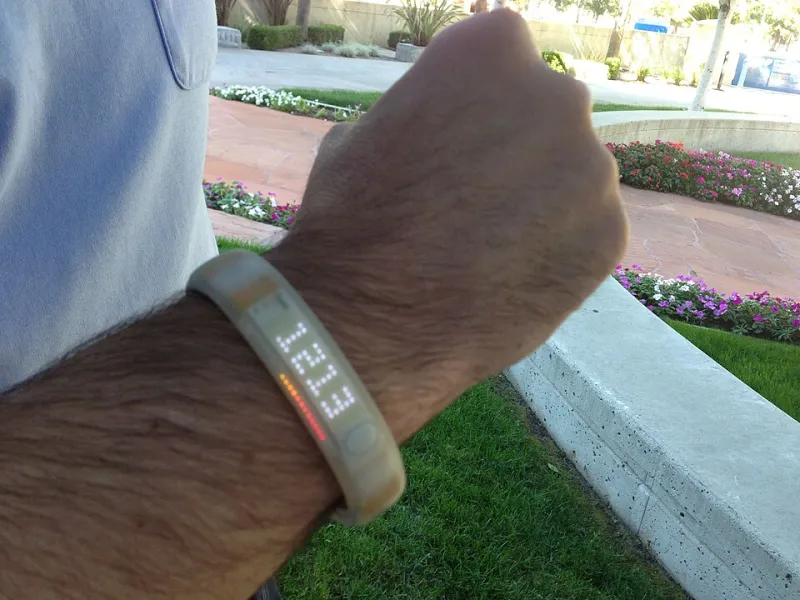
Pocket-Sized Steps: Why Fifteen Minutes on the Pavement Can Beat Big Step Targets
Photo: Becker1999 from Grove City, OH, CC BY 2.0, via Wikimedia Commons
Big step goals have a habit of looking brilliant on a Sunday evening and slightly ridiculous by Tuesday lunchtime. That is not a motivation problem so much as a diary problem. Most of us are not short of willingness to walk; we are short of a clear, repeatable slot in the day. The 15-minute pavement rule is a way to stop waiting for the perfect long walk and start banking smaller ones.
What the 15-minute pavement rule actually means
The rule is simple: once a day, walk for fifteen minutes at a purposeful pace, ideally outdoors, and treat it as a proper walk rather than leftover admin. It does not need to be a loop around a reservoir or a fell hike. A block, a high street, a park path, a trip to the shop and back — all count. The only conditions are that you leave the house deliberately and keep moving for roughly a quarter of an hour.
In 2026, with plenty of us still juggling hybrid work, school runs and unpredictable weather, that feels more achievable than a rigid 10,000-step target. The point is not to replace longer walks. It is to make sure a busy day is not a zero day.
Why micro-walks count
Short walks are easy to dismiss because they do not look impressive on paper. But steps are cumulative. Fifteen minutes at a normal-to-brisk pace often lands somewhere in the 1,200 to 1,800-step range, depending on stride length, hills and how many times you stop to let a dog, buggy or delivery van pass. Do that five days a week and you have added thousands of steps without carving out a two-hour window.
There is also a psychological advantage. A fifteen-minute rule is small enough to survive a grim forecast, a late meeting or a low-energy afternoon. It gives you a decision you can actually make: not “can I fit in a big walk?” but “can I fit in fifteen minutes?”
How to track micro-walks with a pedometer
You do not need a complicated dashboard. A basic pedometer can do the job if you use it consistently.
- Start from a known number. Note your step count before you leave. When you get back, subtract the starting figure. That is your micro-walk total.
- Keep the device in the same place. A clip on the waistband or a pocket position used every time gives you a more comparable reading than moving it from bag to coat to trouser pocket.
- Use a timer, not a target. Walk for fifteen minutes rather than chasing a step number. That keeps the habit about time and consistency, not just data.
- Log the week, not the day. A weekly tally is more forgiving and more revealing. If you manage four pavement walks out of seven, that is still a useful pattern.
- Check the reset. Some pedometers reset at midnight; others hold a seven-day memory. Know which one you have before you start comparing days.
If you use a phone, remember that pocket position and bag carry can change the count. A dedicated pedometer is often the simpler tool for this sort of short, repeated walk because you can clip it on and forget it.
UK-proofing the rule: weather, pavements and high streets
British weather is less of a barrier than a design brief. The trick is to have a short list of routes that work in ordinary drizzle, not just in brochure sunshine.
- Pick three default loops. One around your block, one to a local shop or post office, one on a park path or high street. Having options removes the evening debate.
- Dress for the pavement, not the summit. A light waterproof, a hood and shoes with decent grip will handle most UK drizzle. You do not need expedition kit for fifteen minutes.
- Watch the surface. Wet leaves, painted crossings and worn paving slabs can be slippery. Slow down on corners and choose well-lit routes after dark.
- Use covered high streets and arcades. On truly grim days, a town-centre loop with shop windows and covered sections can keep the walk going without turning it into a soak.
- Avoid the busiest times if you can. School pickup and commuter rush can make narrow pavements feel like an obstacle course. A slightly earlier lunch break is often calmer.
- Think about daylight. In winter, a lunchtime pavement walk is often the easiest way to get outdoor minutes before the light goes. A small torch or reflective detail helps on early evening routes.
A realistic micro-walk day
Here is what the rule can look like without any heroic scheduling. You walk fifteen minutes to a local shop and back in the morning, taking a slightly longer route than necessary. At lunch, you do a ten-minute loop around the block and a five-minute stretch of the high street. After work, you add a short park path before dinner. None of those walks is dramatic. Together they turn a day that would have been mostly sitting into one with a few thousand extra steps and a bit of fresh air.
The rules that keep it honest
Do not turn the 15-minute pavement rule into another stick to beat yourself with. If a day goes sideways, a ten-minute walk still counts as a win. If the weather is awful, a covered high street or a brisk indoor walk can keep the habit alive. And if you are managing a health condition, injury or mobility issue, treat the fifteen minutes as a flexible benchmark rather than a prescription.
The best step target is the one you can repeat on a wet Wednesday in November. For many UK walkers in 2026, fifteen minutes on the pavement is a far more useful starting point than a big number that only works on perfect days.