The Dog Walker's Step Audit: What Your Lead Hand Is Hiding

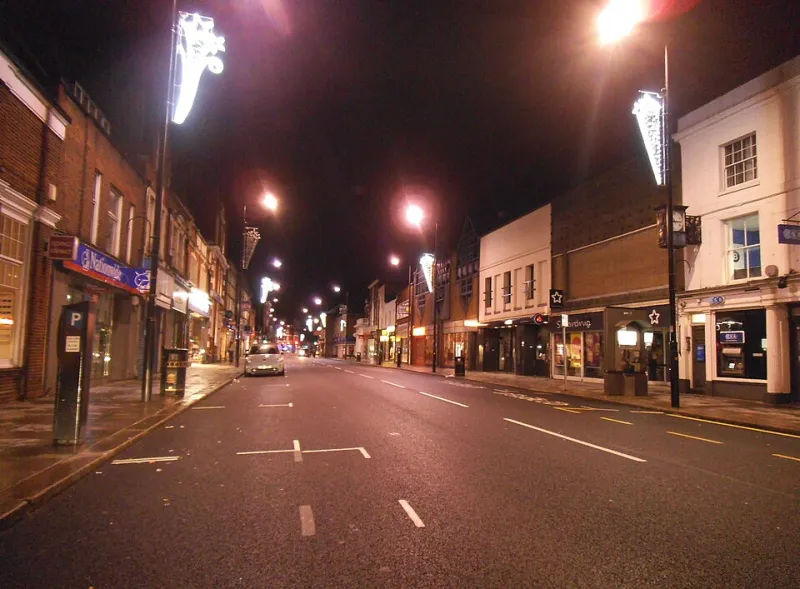
Photo: Walter Baxter, CC BY-SA 2.0, via Wikimedia Commons
Dog owners are some of the most consistent walkers in the country. Rain or shine, the evening loop happens. Yet a pedometer can make a generous dog walk look like a short stroll. The usual suspect is not the dog, the weather, or your motivation. It is the hand holding the lead.
The lead hand is a blind spot
Most wrist trackers count steps by sensing regular arm swing. A free arm swings; a lead arm often does not. If you hold a short lead at hip height, your forearm stays fairly still while your legs keep moving. The tracker sees less rhythm and logs fewer steps. Clip-on pedometers have a different view: they measure hip movement. They can be more reliable, but leash tension, a shortened stride, and constant stopping can still skew the count. In 2026, sensors are better than they were, but none of them have a setting called 'dog sniffing a lamp post'.
Why dog walks are awkward data
Dog walks are stop-start. You pause at kerbs, stand while your dog sniffs, sidestep a puddle, and speed up to cross a road. A pedometer may count some leash jerks as steps and miss others. If you use a fixed stride length, the distance can be off even when the step count looks reasonable. Wet pavements and leaf mulch make you shorten your stride. A pulling dog makes it worse. The result is a walk that felt like 3,000 steps and reads like 2,200.
Placement fixes that actually help
First, move the device, not the dog. If you wear a wrist tracker on the lead hand, try the free wrist for a week. Keep the lead in the same hand if that is safer for you and the dog; just move the tracker. If you use a clip-on, put it at the centre of your waistband, not on the lead-side pocket. A loose pocket adds noise; a tight waistband gives a cleaner signal. A shoe pod is another option because it counts footfalls directly, though it needs careful calibration.
Hands-free leads can free both arms, but they are not automatically better. A waist belt or cross-body lead can be useful for a steady dog on a familiar route. It is not the right choice for a strong puller or a busy pavement. Safety first: you need control near roads, cyclists, and other dogs. If a hands-free setup changes your posture or makes you lean, it may swap one data problem for another.
Check the basics too. Wrist devices should sit snug, just above the wrist bone. Set your handedness correctly. Clip-on pedometers need your stride length, ideally measured over 100 metres on flat pavement rather than guessed. Use walking mode, not running or auto-detect. Keep the battery topped up. Update the firmware. These small settings matter more on a dog walk than on a treadmill.
The two-walk pavement audit
Here is a simple test you can run on an ordinary British street. Pick a loop of about 1 km: 400 m of flat tarmac, 200 m of residential pavement with a few kerbs, 200 m of park path, and 200 m of mixed surface. Include one road crossing and one place where your dog usually stops. Walk it at the same time of day, in similar weather, with the same lead and the same dog. Do not change your pace on purpose.
Walk one: wear your wrist tracker on the lead hand as usual. Walk two: keep the lead in the same hand, but wear the tracker on your free wrist. If you have a clip-on pedometer, wear it at the centre of your waistband on both walks as a reference. Record steps and time. Repeat on a second day to reduce one-off weirdness. If the lead-hand reading is consistently lower than the free-hand reading and the waist clip agrees with the free hand, you have found your lead-hand effect.
For a manual check, count your steps aloud for a 100-step stretch on flat tarmac. Note the tracker reading before and after. Do the same on the return leg. You do not need a lab; you need a repeatable route and a note of the conditions. A wet Tuesday can read differently from a dry Thursday, so compare like with like.
What to do with the result
If the gap is small, stop worrying. A few percent is normal. If the gap is large and repeatable, change your setup rather than your walking. Wear the tracker on the free wrist for dog walks, or use a waist clip as your everyday device. Calibrate stride length. Accept that dog walks will always include standing time that is not step time. The goal is not a perfect number. It is a number you trust enough to compare week to week.
Your dog does not care about your step count. But if you are using steps to keep an eye on your movement, the lead hand should not be allowed to quietly erase a good walk. A ten-minute audit on your normal pavement is a smarter fix than chasing a bigger target. Step further, walk smarter, feel better.