Tinsel, Trolleys and Tall Tales: What Festive Shopping Really Does to Your Step Count
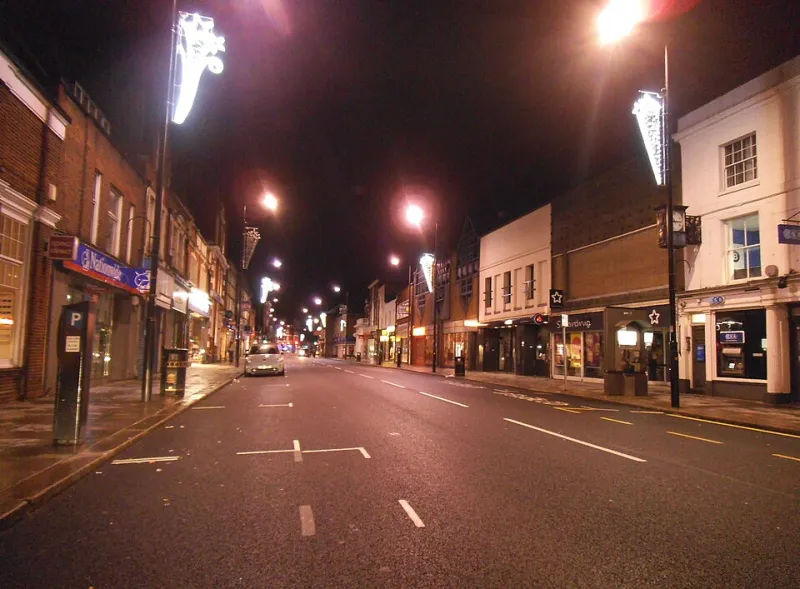
Photo: David Howard , CC BY-SA 2.0, via Wikimedia Commons
The most wonderful time of year for questionable step data
There is a particular moment in late November when a normal Saturday suddenly becomes a logistical operation. You leave the house with a sensible list, a reusable bag and a vague plan to be home by lunch. You return four hours later with a aching shoulder, a carrier bag handle carved into your wrist and a pedometer insisting you have walked halfway to Leeds.
Christmas shopping can genuinely add movement to your day. It can also produce some of the most misleading step totals of the year. The trick is not to dismiss the festive high street as fake exercise, but to understand what kind of walking it actually is — and where the numbers start to drift.
At PedometerShop, we are fond of a step count that tells the truth. So here is a calm look at the Christmas shopping trip: the real gains, the inflated bits, and how to measure the whole thing without turning a nice day out into an accounting exercise.
Car-park laps are still walking, but let us be realistic
Retail parks are brilliant at generating steps that feel accidental. You park in the far corner because the near spaces are full, walk to the entrance, realise you have forgotten the list, walk back, then repeat the whole loop when you move the car to the other side of the complex.
That is movement. It counts. But it is rarely the long, steady walk your pedometer might imply. It is stop-start walking, often at a shuffle, punctuated by waiting for cars reversing out of spaces and standing still while someone loads a flat-pack bookcase into a hatchback.
A useful rule of thumb is to treat car-park steps as a small bonus rather than the main event. They add up, especially if you deliberately park a little further away, but they do not replace a proper walk. If your festive trip involves twenty minutes of circling for a space and five minutes of actual walking to the door, your pedometer is recording a very different kind of day from a brisk loop around the park.
Crowded pavements make more steps than they feel like
High streets in December are strange places for walkers. You are constantly adjusting pace, sidestepping, stopping at shop windows and negotiating around people who have decided to hold a family reunion in the middle of the pavement.
All of that produces steps. Some pedometers will count them generously. The movement is real, but the effort is not the same as a continuous walk. You might spend forty minutes on a busy high street and cover less ground than you would in twenty minutes on an empty residential street, simply because so much of the time is spent hovering, turning and waiting.
This is where step totals can flatter us. A big number looks impressive, but step count alone does not tell you whether you were strolling, striding or standing still while a child inspected a giant inflatable snowman. For festive shopping, it is worth pairing your step total with a rough sense of time and distance. If the numbers look unusually high for the ground covered, crowded pavements are often the reason.
Bags, coats and pocket pedometers
A heavy bag changes how you walk. It shortens your stride, pulls one shoulder down and encourages a sort of defensive waddle through the crowds. That can increase the number of steps you take to cover the same distance, because each step is smaller. In other words, a Christmas shopping trip with three loaded carrier bags may genuinely produce more steps than the same route walked empty-handed — but not necessarily more useful movement.
Then there is the coat-pocket problem. Winter is hard on pedometers. Thick coats, swinging bags and hands jammed into pockets can produce jolts that some devices read as steps. A pedometer clipped to a waistband or worn in a secure inner pocket tends to be more reliable than one bouncing around in an outer coat pocket. If you are using a phone, remember that pushing a trolley or holding a bag can also affect how the accelerometer interprets your movement.
The honest approach is simple: pick one carry position and stick to it. If your pedometer lives in your coat pocket all winter, accept that its festive readings may be a little theatrical. If accuracy matters, move it closer to your body and keep it there.
Where the step inflation creeps in
Christmas shopping is not one continuous walk. It is a series of small walks separated by queues, tilting rails, escalators and the hunt for a lost glove. That stop-start pattern makes step counts easy to overstate as exercise.
There is also the temptation to double-count. You walk to the shops, walk around the shops, walk back to the car and then walk from the car to the front door. It all counts, but it is not the same as a dedicated walking session. If you are using a step challenge or tracking weekly activity, be careful not to treat a shopping trip as a substitute for every other walk in your week.
A fair way to see it is this: festive shopping is a useful nudge to move more, not a training plan. It can lift a low-activity day, especially if you normally spend Saturdays on the sofa. It rarely replaces the benefits of a purposeful walk at a steady pace.
Practical tips for honest festive step data
Start by wearing your pedometer consistently. A waistband clip or inner pocket is usually more dependable than a loose coat pocket. If you are using a phone, carry it in the same place you normally would and avoid checking the total every five minutes.
Second, do a rough route check. If your pedometer says 12,000 steps but you know you only walked from the car park to the shops and back, treat the number with a raised eyebrow. It may be right, but crowded pavements and bag swings can add noise.
Third, separate shopping steps from walking steps in your head. A twenty-minute brisk walk before you hit the high street is worth more than an hour of drifting between shops. If you want a genuine winter walking habit, build the walk around the shopping trip rather than expecting the shopping trip to be the walk.
Finally, give yourself a break. December is not the month for perfect data. The aim is to keep moving, enjoy the mince pies and avoid letting a festive step total convince you that you have done more than you have. A pedometer is a helpful companion, not a judge.
The verdict: a festive bonus, not a free pass
A British Christmas shopping trip can be a decent day of movement. It gets you out of the house, puts you on your feet and often adds a few thousand steps you would not otherwise have taken. That is worth something.
But it is easily overstated. Car-park laps, crowded pavements, heavy bags and coat-pocket pedometers can all inflate the story. Use the festive rush as a nudge to walk a little more, not as proof that your winter fitness is sorted. Step further, walk smarter, and keep one eye on what the numbers are really telling you.