The Plot Thickens: Why an Hour on the Allotment Is a Smarter Step Session Than You Think
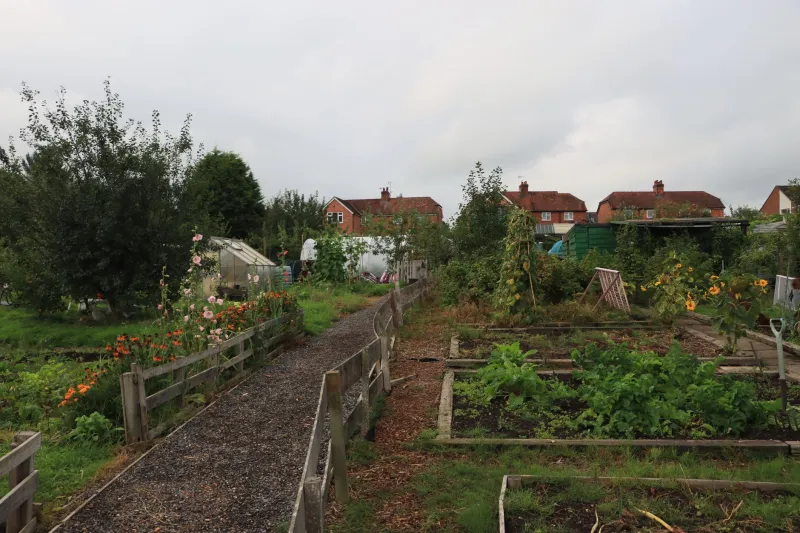
There is a particular kind of British morning that begins with a gate latch, a squeaky hinge and the smell of damp earth. You arrive at the allotment with no real plan beyond checking the brassicas and maybe finally sorting out that bit by the compost heap. An hour later you have walked to the shed four times, filled the watering can twice, pushed a wheelbarrow up a narrow path and done a fair amount of standing still, staring at a courgette plant as if it owes you money.
It does not feel like a workout. But put a pedometer on and the numbers can be quietly impressive. Not because allotment gardening is secretly a bootcamp, but because it is full of the sort of stop-start, purpose-driven movement that formal exercise often misses.
Why allotment steps feel different from a gym warm-up
A gym warm-up tends to be linear. You get on a machine, you move in one direction, you count the minutes. An allotment morning is more like a scatter diagram. You walk to the tap, back to the bed, over to the shed, down to the gate, across to the neighbour who wants to tell you about their runner beans. You kneel, stand, bend, carry, rake and repeat.
The step total may not rival a brisk half-hour walk, but the movement is varied. That matters. For pedometer users, the allotment is a useful reminder that steps are only one measure of a busy body. The repeated trips, the lifting and the pottering all add up to something that feels much more natural than pacing a car park before a workout.
In 2026, with gym memberships still costing a pretty penny and many of us juggling commutes and childcare, the allotment deserves a place in the conversation about everyday movement. It is not a replacement for a proper walk, but it is not nothing either.
The honest pedometer problem: arms, tools and wheelbarrows
The main issue is not whether gardening counts. It is whether your pedometer is counting the right thing.
Wrist-worn trackers are brilliant for convenience, but they can be easily fooled. Weeding, raking, digging and pushing a wheelbarrow all involve arm movement that can look a lot like stepping. If you spend ten minutes yanking out bindweed with real enthusiasm, your wrist device may reward you with a step count that is more fiction than fact.
Hip-based pedometers are generally more reliable for step counting because they respond to the actual bounce and rhythm of walking. If you use a wrist tracker, try wearing it on your non-dominant arm and check the data afterwards. A sudden spike while you were stationary is a clue that arm movement has crept in.
Some devices offer a gardening or activity mode. Use it if you have it. If not, be sensible. You do not need to edit every minute of your day, but you should avoid treating a wrist-based step total as gospel when the secateurs have been out.
What a realistic allotment step count looks like
There is no single number. A small plot with a tidy shed and a tap nearby will produce fewer steps than a sprawling site where the water butt is at the far end and the compost heap is practically in the next county.
As a rough guide, a 45 to 60 minute potter might add somewhere between 1,500 and 3,000 steps, depending on how often you walk to the shed, the tap or the gate. Add a walk to and from the allotment and the total rises. Add a wheelbarrow and the effort rises, even if the step count does not.
That is why it is worth looking beyond the magic number. A morning at the plot might not hit 10,000 steps, but it can still be a solid chunk of active time. The trick is to log it honestly and consistently, rather than trying to turn every rake stroke into a personal best.
Logging gardening without turning it into a spreadsheet
You do not need a complicated system. A few simple habits will keep your data useful:
- Note the start and finish time of your allotment session.
- Jot down the main tasks: digging, watering, weeding, wheelbarrow trips.
- Record whether you used a hip pedometer or a wrist tracker.
- If your device has a gardening mode, use it and stick with it.
- Review your weekly totals rather than policing every individual minute.
If you are taking part in a step challenge, decide in advance how you will handle gardening. Some people count only the steps recorded by a hip device. Others count wrist-based steps but discount obvious arm-heavy periods. The key is consistency. A challenge that rewards honest logging is much more enjoyable than one that turns into an argument about cucumber frames.
The quiet advantage of a British allotment
Allotments are not fashionable in the way a boutique fitness class is fashionable. They are muddy, municipal and occasionally overrun with slugs. But they offer something that many formal workouts struggle to match: a reason to move that has nothing to do with exercise.
You are not walking to hit a target. You are walking because the watering can is empty, because the shed key is in the other pocket, because the neighbour has a spare rhubarb crown. That sense of purpose makes movement feel less like a chore and more like part of the day.
And in the colder months, when the light is thin and the sofa is tempting, a quick trip to the plot can be a gentle way to add movement without committing to a full walk. It will not always be pleasant. British weather has opinions. But a brisk march around the site to check for frost damage is still a walk, even if you are wearing wellies.
Make your allotment steps count
If you want to get the most from your pedometer at the plot, keep it simple. Wear the device consistently, be sceptical of wrist-based step spikes during arm-heavy tasks, and treat gardening as part of your weekly movement rather than a rival to your daily walk.
A morning of weeding, wandering and wheelbarrows will never look like a gym warm-up. That is rather the point. It is movement with a job to do — and for many UK pedometer users in 2026, that is exactly the kind of honest activity worth counting.