Treadmills, Trolleys and Hallway Shuffles: Getting Honest Step Data Indoors

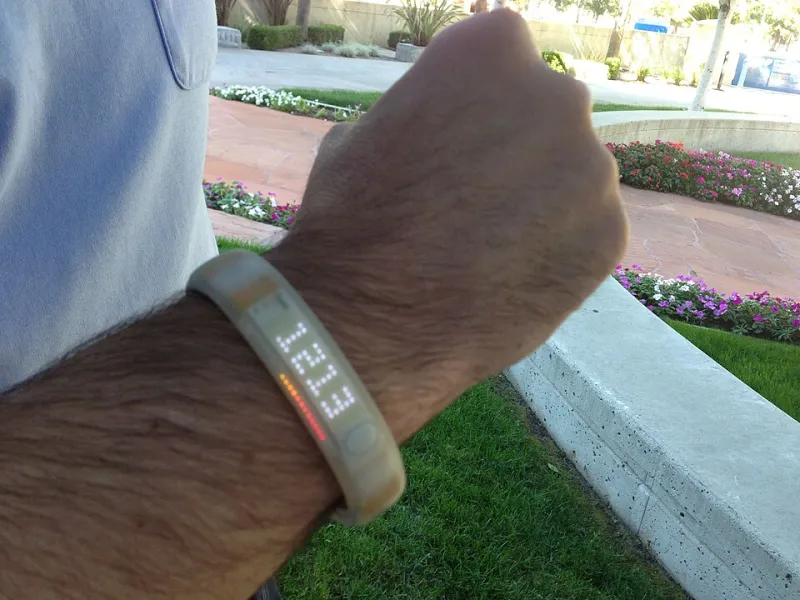
Photo: Colin, CC BY-SA 3.0, via Wikimedia Commons
Indoor walking has a reputation problem. On paper, a treadmill session or a few laps of a shopping centre should be a step-counting dream: flat surfaces, no traffic, no puddles. In practice, your pedometer can come back with a number that feels suspiciously low, oddly high, or simply disconnected from what your legs just did.
That is not usually a malfunction. A pedometer is a pattern-recognition device, not a referee. It looks for the rhythmic acceleration of a step and decides whether the signal is close enough to its internal template. Change the surface, the footwear, the arm position or the rhythm, and the count can drift. Indoors, almost all of those things change at once.
How a pedometer decides a step happened
Most pedometers use an accelerometer to detect movement, then an algorithm to filter out everything that is not a step. Hip-worn devices tend to pick up the up-and-down motion of walking. Wrist-worn devices have to separate arm swing from hand gestures, pushing a trolley, or carrying a bag. Phone-based trackers have their own rules, depending on where the phone is and what app is running.
There is no single universal standard. Two devices can disagree on the same walk and both be doing roughly what they were designed to do. The question indoors is not 'which one is telling the absolute truth?' It is 'which one is giving me a useful trend?'
Assumption one: treadmill steps are easy to count
A treadmill looks like the ideal test. You walk in a straight line at a steady pace, so surely every step is obvious? Not quite. A steady belt can produce a very regular signal, which some algorithms handle well and others smooth out. Holding the handrail reduces the natural arm and torso movement that wrist devices rely on. Resting your phone in the cup holder takes it out of the equation altogether.
Then there is stride length. The treadmill console may give distance, but your step count depends on how long your stride actually is. If you take shorter, quicker steps at an incline, the distance and the step total will not line up neatly with an outdoor walk. Use the console as a cross-check, not as a step oracle.
Assumption two: shopping centres are step goldmines
Shopping centres have long, smooth corridors and no rain, which makes them tempting for a wet-day walk. But they are not designed as walking tracks. You stop to browse, queue, turn, stand still, and push a trolley. A hip pedometer may cope reasonably well with straight walking. A wrist pedometer can miss steps when your arm is resting on a trolley handle, or count hand movements when you are gesturing at a shelf.
If you are walking laps before the shops get busy, you will get a cleaner count than during a Saturday afternoon scrum. If you are pushing a trolley, treat the step number as a rough activity marker rather than a precise distance. The same goes for escalators, lifts and the ten minutes you spend standing still trying to remember what you came for.
Assumption three: walking around the house is just smaller
Walking around the house is not simply an indoor version of a pavement stroll. It is short bursts, tight turns, shuffling in slippers, and plenty of stopping. Step algorithms often need a few consecutive steps to confirm a pattern. A two-step trip to the kettle may not register. Stairs may be counted as flights, steps, or not at all, depending on the device.
That does not make house walking worthless. It just means the step count is a poor stand-in for effort. If you are pacing during a phone call or doing laps of the hallway on a wet afternoon, use time as your measure. Ten minutes of continuous walking is a clearer target than an exact step number that your device may or may not agree with.
Why indoor counts drift
The main culprits are reduced stride length, stop-start movement, footwear, surface, and arm position. Carpets and rugs can soften the signal. Slippers can change your gait. Pushing, carrying and holding can keep your arms still or set them moving in ways that are not steps. Indoors, you also tend to walk in shorter bursts, which gives the algorithm less to work with.
Then there is placement. A pedometer clipped to a waistband, tucked in a pocket, worn on a wrist and carried in a bag are all measuring different things. None of them is wrong, but they are not interchangeable. If you want comparable numbers, pick one method and stick to it.
Getting honest indoor data
Start with a simple self-test. Count one hundred steps by hand on a flat, familiar route, then check what your device says. Repeat it on the treadmill at a comfortable speed. You are not looking for a perfect match; you are looking for a consistent relationship. If your device reads low by roughly the same amount each time, you can interpret the trend with that in mind.
Reset the counter before each session and note the start and end time. For treadmill walks, record the console distance and your time alongside the step count. For shopping-centre walks, use a lap route and keep your device in the same place. For home walking, set a timer and count active minutes rather than chasing an exact total.
A weekly average is more useful than a daily argument with your pedometer. Log the numbers in a notes app or a simple spreadsheet, and look at the pattern across seven days. If one indoor session looks odd, do not try to 'correct' it by guessing. Mark it as an estimate and move on.
When indoor counts are good enough
For general activity tracking, consistency and motivation, indoor step counts are perfectly usable. They are not a medical measurement, and they are not a precise calorie counter. If you are using step data for rehabilitation, a health condition or a clinical programme, ask the relevant health professional what they recommend rather than relying on a consumer device.
A pedometer is a noisy friend, not a judge. Indoors, it is at its best when you treat it as a relative measure: more than yesterday, less than last week, roughly in line with your usual routine. When the rain keeps you in, that is usually the honest answer you need.