Sand Between the Sensors: What a Coastal Walk Really Does to Your Step Count
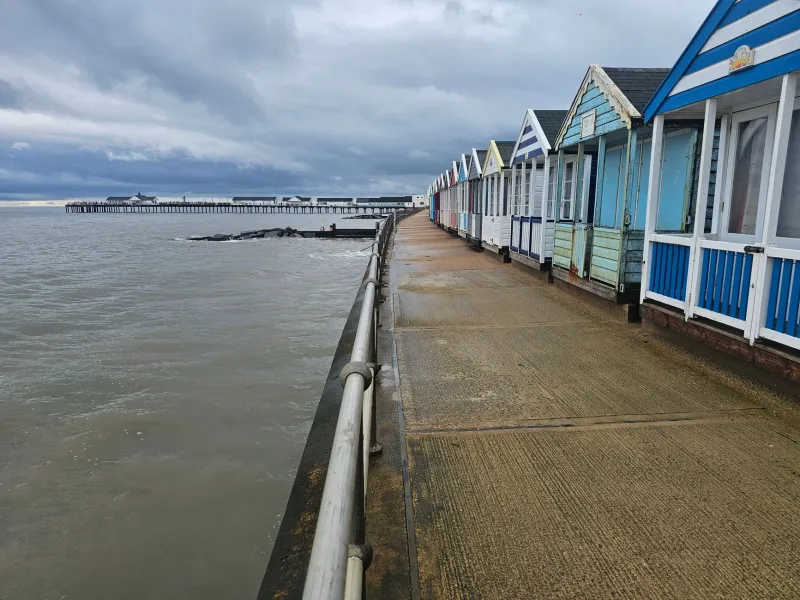
There is a particular kind of disappointment in finishing a bracing coastal walk, feeling like you have worked properly hard, and then glancing at your pedometer to find a number that looks more like a gentle potter to the shop. The sea air has done its thing, your calves know about it, and yet the gadget on your wrist or waistband seems to have been on a different outing entirely.
That is not necessarily a malfunction. A UK beach is one of the strangest environments you can ask a step counter to make sense of. Sand shifts, shorelines slope, wind pushes, and your own gait changes without you really noticing. If you want honest data from a seaside stroll, it helps to understand what the device is measuring — and what it is missing.
Why soft sand changes the maths
On pavement, most of us walk with a fairly predictable rhythm. Your foot lands, your leg pushes, your body moves forward, and the accelerometer inside your pedometer detects a regular peak of movement. Count the peaks, add a stride-length estimate, and you get steps and distance.
Soft sand interrupts that rhythm. Your foot sinks, your stride shortens, and you spend more energy pushing off without travelling as far. In practical terms, you may take more steps per mile than on tarmac, but your cadence can drop because each step takes more effort. A pedometer that is tuned for normal walking may miss some of those slower, softer steps, especially if it is clipped to a pocket that tilts as you sink and scramble.
The result is a number that under-represents your effort. You have not cheated the walk; the walk has cheated the step count. This is one of the clearest examples of why steps and effort are not the same currency.
The camber and the climb
Beaches are rarely flat. Many have a noticeable slope from the dunes down to the waterline, and the waterline itself can be cambered by the retreating tide. Walking along that slope means one leg is doing slightly different work from the other, and your hips and ankles are constantly making small adjustments.
Add in a few shingle banks, a set of wooden steps, or a path that climbs back up to the promenade, and you have a walk where the effort is front-loaded into terrain rather than distance. Your pedometer will count the steps on the steps, but it will not tell you that your legs were working harder on the loose stuff. It also will not know that you spent five minutes standing still, watching the tide come in, while your heart rate recovered.
This is not a reason to distrust the device. It is a reason to read it alongside the landscape. A coastal walk with 4,000 steps on sand and shingle may be a more substantial session than 6,000 steps around a retail park. The number is a clue, not a verdict.
Sea air, wind and the wobble factor
Sea air is lovely. It is also moving. A steady headwind on an exposed beach adds resistance without adding steps, so you can finish a walk feeling like you have done more than the data suggests. A tailwind can do the opposite, making the same distance feel unusually easy.
Wind also creates movement that a pedometer may misinterpret. If the device is loose in a pocket, swinging on a lanyard, or worn on a wrist that is being blown about, it can pick up extra motion. That does not mean every windy walk will inflate your count, but it is worth tightening the fit and keeping the device in the same place if you want to compare one outing with another.
Sea air can also lure you into walking further than you planned. The cooler feel of the coast masks effort, and it is easy to end up a long way from the car park before you notice. That is a pleasant trap, but it is still a trap. Take water, check the tide times, and treat the turn-around point as part of the plan rather than an afterthought.
What your pedometer is actually measuring
Most consumer pedometers use an accelerometer to detect movement peaks. They are not surveying the ground beneath you. They do not know whether you are on wet sand, dry sand, shingle or a freshly swept promenade. Some models use GPS to estimate distance, others rely on a stride length you have entered, and many do a bit of both.
On a beach, all of those assumptions get stretched. Your stride length changes. Your arm swing changes. Your pace changes. The device may count fewer steps because your gait is less regular, or it may count more because the terrain is making your body move in new ways. Neither outcome is a scandal. It is simply a reminder that a pedometer is a useful rough guide, not a laboratory instrument.
If you want a fairer comparison, walk a known stretch of firm sand or promenade at a steady pace and see how the count compares with your usual pavement route. Do not expect the beach to match your street data exactly. Expect it to tell a different story.
Planning a coastal walk by effort, not just steps
A better approach is to set the walk by time, terrain and perceived effort, then use steps as a secondary measure. If you are new to coastal walking, choose a shorter section of firm sand near the waterline, check the tide table, and build in a return leg on the promenade. If the sand is soft or the shingle is deep, reduce the distance and accept that fewer steps may still mean more work.
Use the RNLI's coastal safety advice, local tide times and the Met Office forecast as part of your planning. A beach that is perfect at low tide can be a very different proposition a few hours later. And if you are walking alone, tell someone where you are going and when you expect to be back.
At PedometerShop, we are all for step targets, but a coastal walk is a good reminder that movement has texture. The number on your device is one signal among several. Your breathing, your legs, the wind on your face and the time you spent out there all count too — even when the pedometer does not.
A fairer seaside scorecard
If you want to keep tracking, log the conditions alongside the count: footwear, device placement, whether the sand was firm or soft, and how the walk felt. Over a few outings, you will build a more honest picture of what a seaside step actually represents. You might even find that your favourite beach route is not the one with the biggest number, but the one that leaves you feeling like you have walked further than the data suggests. That is not a glitch. That is the coast.