When the 7:42 Vanishes: A Field Guide to Unplanned Commuter Steps
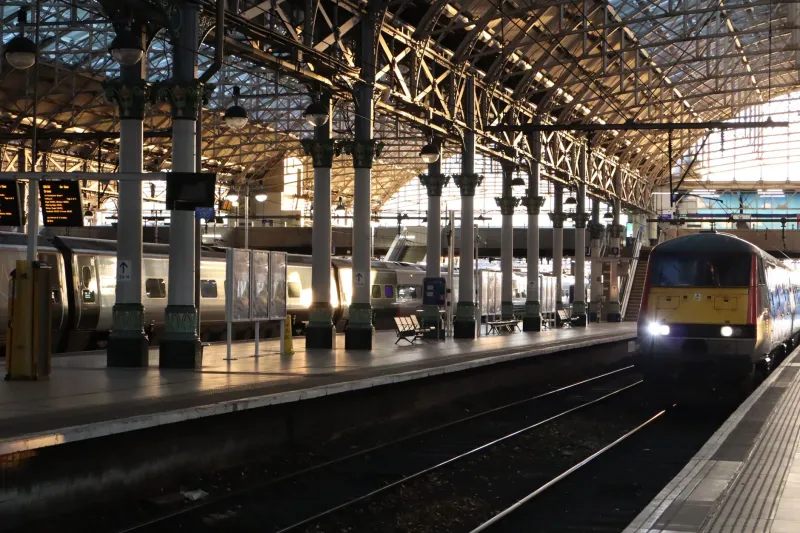
At 7:41 on a grey Tuesday, the platform display does what platform displays do best: it removes your train. The 7:42 to the city is cancelled. A replacement coach will run from the front of the station, calling at all the places you did not plan to visit. Everyone groans. Your pedometer, if it had a face, would look quietly interested.
Rail disruption is rarely welcome, and no one should pretend a cancelled train is a secret fitness programme. But it does create a strange kind of step arithmetic. The commute you carefully learned, with its familiar platform, familiar carriage and familiar walk to the office, suddenly becomes a series of small movements you never budgeted for. In 2026, with rail replacement coaches still a familiar sight on many UK routes, that arithmetic is worth understanding.
The commute you planned and the one you got
A normal commute is a fairly tidy sequence. Walk to the station, stand on the platform, sit on the train, walk to work. Your pedometer sees a predictable pattern: a burst of pavement steps, a pause, another short burst. Over a week, that pattern becomes your baseline.
A disrupted commute is messier. You arrive to find the train cancelled. You walk to the ticket office, then to the information screen, then to the front of the station where the replacement coach is supposedly waiting. The coach is not there yet. You walk to the far end of the station to ask a member of staff. You come back. You queue. You stand. You eventually board a coach that takes a different route, drops you at a town centre stop and leaves you with a fifteen-minute walk to the office.
None of that was in the plan. Some of it will appear on your pedometer. Some of it will not.
Why a broken journey can out-walk a planned stroll
It sounds counterintuitive, but a disrupted commute can sometimes add more movement than a deliberate lunchtime walk. The reason is fragmentation. A planned walk is usually continuous: twenty minutes of steady pavement pounding, one clear block of steps. A disrupted journey is stop-start. You walk, wait, walk, climb a footbridge, descend stairs, pace the concourse, queue for a coach, then walk again at the other end.
That fragmentation matters for two reasons. First, stairs and ramps ask more of you than flat pavement, even if your pedometer treats every step roughly the same. Second, the extra walking often happens in places you would never choose to walk: station subways, windswept forecourts, the long way round to a taxi rank because the ticket barrier is closed.
On some days, the total can be genuinely surprising. A platform change at a large station might add several hundred steps before you have even left the city. A replacement coach that drops you at the wrong end of town can add a mile you did not expect. A journey that would normally produce 3,000 steps might produce 5,000, or it might produce 2,200 because you spent forty minutes sitting on a coach. Both outcomes are possible. That is the point: disruption does not follow a neat formula.
What your pedometer is actually recording
This is where honesty matters. A pedometer is good at counting rhythmic walking. It is less good at understanding context. It may miss steps when you are pushing a heavy suitcase, carrying a rucksack, or shuffling slowly in a queue. It may overcount when you are on a bumpy coach or when you fidget with a ticket machine. GPS can drop out inside stations, and phone-based tracking can suffer in the same way.
So if you want useful data from a disrupted day, do not treat the final number as gospel. Treat it as a clue. Ask yourself what kind of movement produced it. Was it steady walking, or was it pacing and standing? Did you climb two flights of stairs because the lift was out? Did you walk to an alternative station because the replacement bus never came? Those details matter more than a single tally.
The most honest approach is to note the context while it is fresh. A short line in your phone is enough: cancelled train, replacement coach, walked to office from bus stop, two flights of stairs. Later, when you look back at the week, you will know why Tuesday looks odd.
A short audit for a disrupted day
You do not need a spreadsheet for every cancellation. A simple audit is enough. Note the normal route and the actual route. Use your pedometer lap button, if it has one, for each leg: home to station, station wandering, coach stop to office. At the end of the day, compare the total with your usual commute. Then ask three questions.
First, did the extra movement replace something, or was it added on top? If you skipped your lunchtime walk because you were tired and late, the disruption may not have added much to your day overall. Second, did you get any sustained walking, or was it all short bursts? A thousand steps around a concourse is not the same as a thousand steps on a park path. Third, would you repeat it? If the answer is no, it is data, not a habit.
Turning a lost train into useful data
A cancelled train is a lost morning, not a moral test. The goal is not to celebrate disruption or chase a step count through a stressful commute. The goal is to understand your movement better, so you can make sensible choices on ordinary days.
If you use a step challenge, decide in advance how you will treat transport steps. Most challenges count everything, which is fine, but it helps to be clear. A replacement coach walk is still walking. A station concourse shuffle is still movement. The number is not invalid just because it was unplanned.
You can also use disruption to learn about your local area. Which alternative station is actually walkable? Which bus stop leaves you with a decent pavement route? Which coffee kiosk is worth the extra two minutes? These small discoveries can make future cancellations less miserable, and they give your pedometer something more useful than a random spike.
The bonus is not always a bonus
There is a temptation to frame every extra step as a win. Resist it. A disrupted commute can be tiring, stressful and physically awkward, especially if you are carrying a bag, wearing the wrong shoes or walking in the dark. Extra steps taken while anxious or rushed are not automatically better than a calm, planned walk.
So enjoy the odd windfall if it comes. A cancelled train that sends you on a brisk twenty-minute walk might genuinely feel like a small gift. But do not turn it into a rule. Some disrupted days will give you a step bonus. Others will give you 400 steps and a sore shoulder from hauling a suitcase up a footbridge.
Both are honest results. Track them, learn from them, and let the train company worry about the timetable.